Why I think it’s worth doing — and all the documents, in case you want to try it at your school.
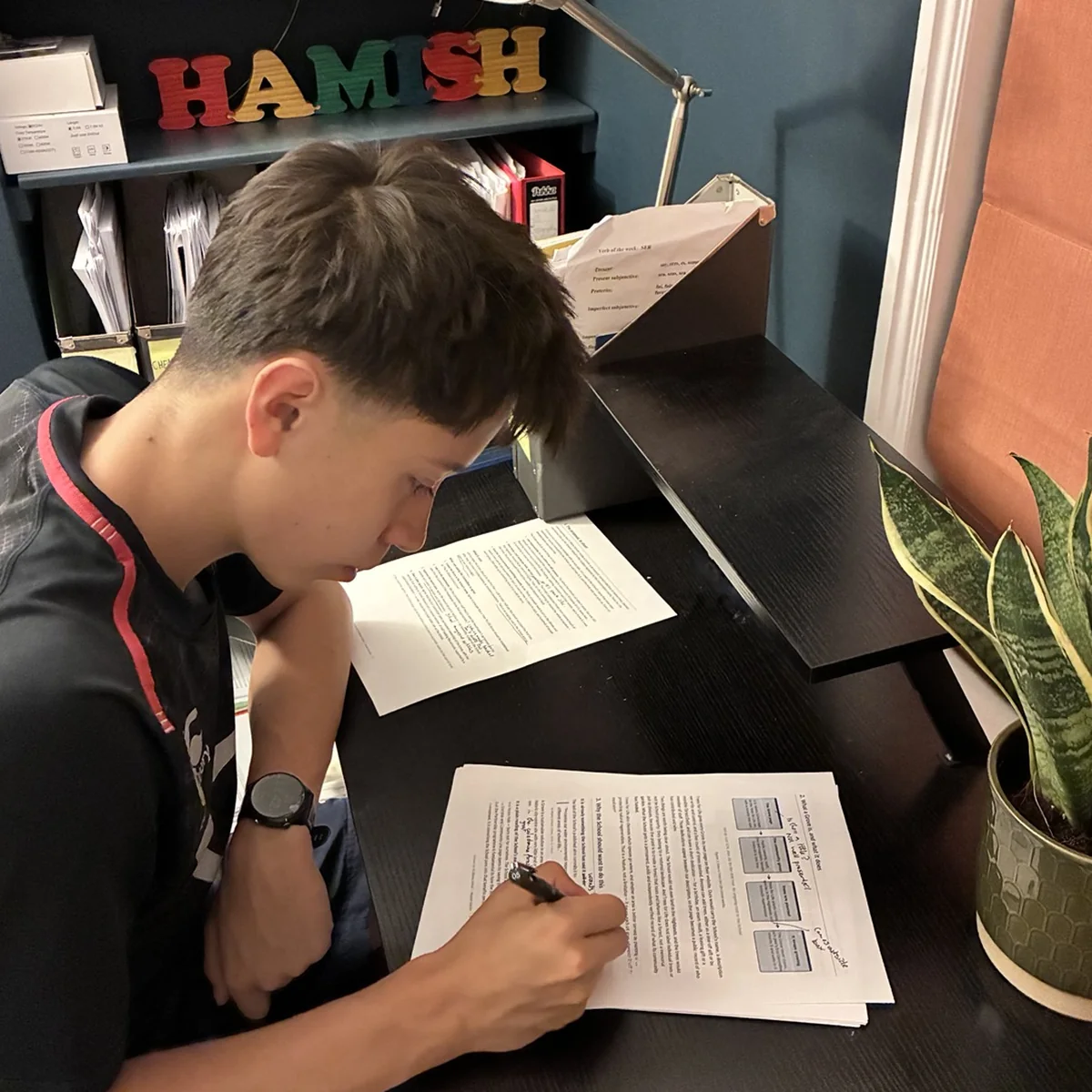
Last month I sent an eighteen-page document to a teacher at my school. During the summer holidays. Unprompted.
I’m aware of how that sounds.
The document is a proposal for St Albans School to start its own Grove. A Grove is a collection of native trees planted in the Scottish Highlands as part of restoring the Caledonian Forest. The Grove would have its own page with a running total, £6 pays for one tree, and anyone connected to the school could add to it — pupils, parents, staff, people who left years ago.
I haven’t had an answer yet. I’m publishing the proposal now anyway, for two reasons I’ll come back to at the end.
Where the idea came from
When I was eleven I wrote a post on this website about rewilding. It’s still here. It has a screenshot in it, and the screenshot says 71 trees.
My primary school, Alban City, had just started a Grove. My dad was a governor there and set it up. The school had been trying to cut its environmental impact but couldn’t do much to reduce the emissions caused by its gas heating, so it worked out how many trees would offset a year’s worth of gas — sixty — and asked parents and pupils to contribute to fund them. When I wrote about it, the total had just gone past seventy.
I looked at the same page again this summer. It now says 615.

None of the governors who approved it are still there. The Eco Committee is completely new. A lot of the staff have changed. It kept going anyway, a few trees at a time, for six years, funded almost entirely by people putting in small amounts — and from the look of it, it has found new energy recently.
I’m told that’s fairly unusual. A lot of school projects fade out once the person running them leaves.
Why I thought it was worth doing
I’m not going to pretend I spent the summer agonising about the environment. I noticed the heatwaves and the wildfires, the same as everyone else, thought “that’s bad”, and then carried on with my summer. I suspect that’s most people. It isn’t that you don’t care. It’s that the problem is so much bigger than anything you could personally do about it that there’s nowhere obvious to put the caring, so you park it.
Which is why I think the Grove model is quite clever. It asks almost nothing of you. Six quid, whenever you feel like it — or, better, £6 a month, set up once and then forgotten about. That second one matters more than it sounds. Fifty people giving £6 a month would fund 600 trees a year, roughly what my old primary school has managed in six years, and it arrives whether or not anyone remembers to organise anything.
You don’t have to join anything, change how you live, or be the sort of person who is Really Into The Environment. And the maths really works because it’s a school. One person funding one tree is nothing. A thousand pupils, plus parents, plus everyone who has left over the last forty years, all adding to the same total for years, is a different proposition.
Why Trees for Life?
I didn’t want the argument to be “I already knew about this charity, so we should use it.”
The first thing I checked was whether we should do something local instead. Heartwood Forest is a few miles from school and it’s the largest new native forest in England, so it looked like the obvious answer. But the planting there finished in 2019, and the Woodland Trust isn’t raising money to plant more of it. It would have been a brilliant answer in 2010. It isn’t the right one now.
What I like about Trees for Life is that it isn’t only counting trees: the planting is part of restoring a whole landscape, which also means protecting natural regeneration and managing the grazing that stops woodland recovering.

(Image credit: Trees for Life – https://treesforlife.org.uk/)
And there’s a lot to restore. The Caledonian Forest once covered around 1.5 million hectares of the Highlands. Between one and two per cent of it is left. When I looked into this in 2020, the comparison that stuck with me was the Amazon, about a fifth of which has been cleared. In the Highlands it’s closer to 98 per cent. That isn’t a reason to care less about the Amazon. It’s a reason to notice that an even more comprehensively wrecked forest is on our own doorstep, and that we can help restore it.

One thing I found while researching this did surprise me. STC Expeditions, a company the school has used to organise a trip, has its own Trees for Life Grove and plants trees to offset the trips it organises. One donation on their page, from November 2025, lists the schools those 582 trees were for. St Albans is on it — ours came from the Geography trip to Morocco.
So trees have already been planted in the Caledonian Forest in my school’s name. They’re just sitting on somebody else’s page, in a list of twenty other schools, and as far as I can tell nobody at school knows. Part of what the proposal asks is that we start doing this on purpose.
What’s actually in the proposal
Once I decided it was worth doing, I tried to write it as though I were one of the people who would have to approve it, rather than someone who already liked the idea. So most of the eighteen pages is me arguing with myself. Does it just look like the school buying its way out of actually cutting emissions? Does it do anything for the environmental commitments the school has already made publicly? Is it any use educationally, or is it only a donation page? Would families end up feeling they were being asked for money too often?
The money question turned out to be the easiest. Setting up a Grove costs £24, plus £6 for the first tree. I’ve offered to pay the £30 and plant the first one, so it asks nothing of the school’s budget and everything after that is voluntary.
The question I kept coming back to was what happens when I leave.
If it couldn’t survive me leaving, it has been built wrong.
I don’t want to start something that belongs to me. If the school says yes, I’d like to help launch it and push it while I’m there, but then I’ll leave, the way everyone does. So the proposal gives permanent ownership to Green Club, supported by a member of staff, with a pupil Grove Champion who changes over time.
The test isn’t whether anyone notices it launching. It’s whether it’s still growing in 2032.
Where I’ve got to
I sent the proposal to the teacher who runs Green Club during the holidays rather than waiting for September, on the theory that he’d have more time to read it in August than in the middle of term — and that the worst case was he ignored it until September anyway.
His reply was encouraging. It also answered a question I’d deliberately put to him — whether Green Club was in fact the right route for approving something like this. The answer was: not on its own. Because it involves charitable fundraising and money, other staff need to be part of the decision.
That’s probably the most useful thing I’ve learned so far. Having a good idea and a decent argument is about half of it. The rest is working out who actually decides and what they’re going to worry about.
So I don’t know yet whether it’s happening.
Why I’m publishing before I know the outcome
Two reasons.
The first is that if you’re at school with me and you think this is a good idea, that’s useful to know. And if you think it’s a bad one, or that it could be better, that’s more useful still — I’d rather hear it now, while I can still fix the argument before I put it to the people who actually decide.
The second is that most of what took the time isn’t specific to St Albans. The research into Trees for Life, the Alban City example, the comparison with other charities, the governance and most of the risks would apply almost anywhere. It seemed daft to leave it sitting in a file on my laptop.
So the full proposal is below, along with the email I used to send it. They aren’t templates — they’re the actual documents, so parts are very specific to us. If you want to use them, don’t just change the school name: work out what your school already does, who’s responsible for it, whether there’s a better local option, and who would look after a Grove once you’d gone. But you shouldn’t have to start from a blank page.
My complete proposal
This is the actual 18-page proposal I submitted. You can read it here without downloading anything.
Resources if you want to try this at your school
These are the actual materials I have used so far. They are not yet generic templates, but a lot of the research and structure can be adapted for another school.
The full 18-page proposal, including the environmental case, Alban City example, governance, curriculum ideas and risks.
Download PDFAn editable copy if you want to use my proposal as a starting point for your own school.
Download Word version✉️ See the email I used to introduce the proposal
Dear Sir,
Over the summer I have put together the attached proposal for the School to create a Grove — a permanent collection of native trees planted on the School’s behalf in the Scottish Highlands by the conservation charity Trees for Life.
I would like to present it to the Green Club next term, as I think that is the right place for it to be discussed and, I hope, taken forward. I am sending it now rather than waiting until September so that you have time to consider the idea, and to tell me whether the Green Club is in fact the right route for reviewing and approving something like this.
One small thing: the proposal refers throughout to the “Eco Committee”, which is the term the Eco-Schools framework uses. I am very happy to change every reference to the Green Club if you would prefer.
I hope you will find it considered and thorough, and that the benefits come through clearly. Appendix C may be the most useful part for you: it sets out how a Grove would provide evidence against all seven steps of the Eco-Schools framework. It would also cost the School nothing — I would pay the £30 to set the Grove up and plant the first tree myself.
Beyond all that, I believe strongly that it would be good for the school community and for the environment, and that it would keep growing long after I have left.
I would be very glad to hear what you think.
Yours sincerely,
Hamish Baisley
Coming next. As I learn more from taking the proposal through the School, I plan to turn this into a simpler template that other pupils and schools can adapt.
What Happens Next?
Hopefully the next update I write says that St Albans has agreed to go ahead. I’m not assuming it. If it does happen I’ll put up whatever we make to launch it, and eventually turn the proposal into a proper template rather than asking people to adapt mine.
And if you use any of this to start one somewhere else, tell me. I’d like to know.
One last thing. My school’s motto is Non Nobis Nati — born not for ourselves. I’ve heard it a lot and mostly not thought about it. But a forest hundreds of miles away, that we won’t own and most of us will never see, is about as literal a reading of it as I can come up with. The trees planted in the first year would still be growing when next September’s First Form are grandparents.
Every pupil is only at their school for a few years. A forest can be there for centuries.
That seems like a pretty good reason to start.

